
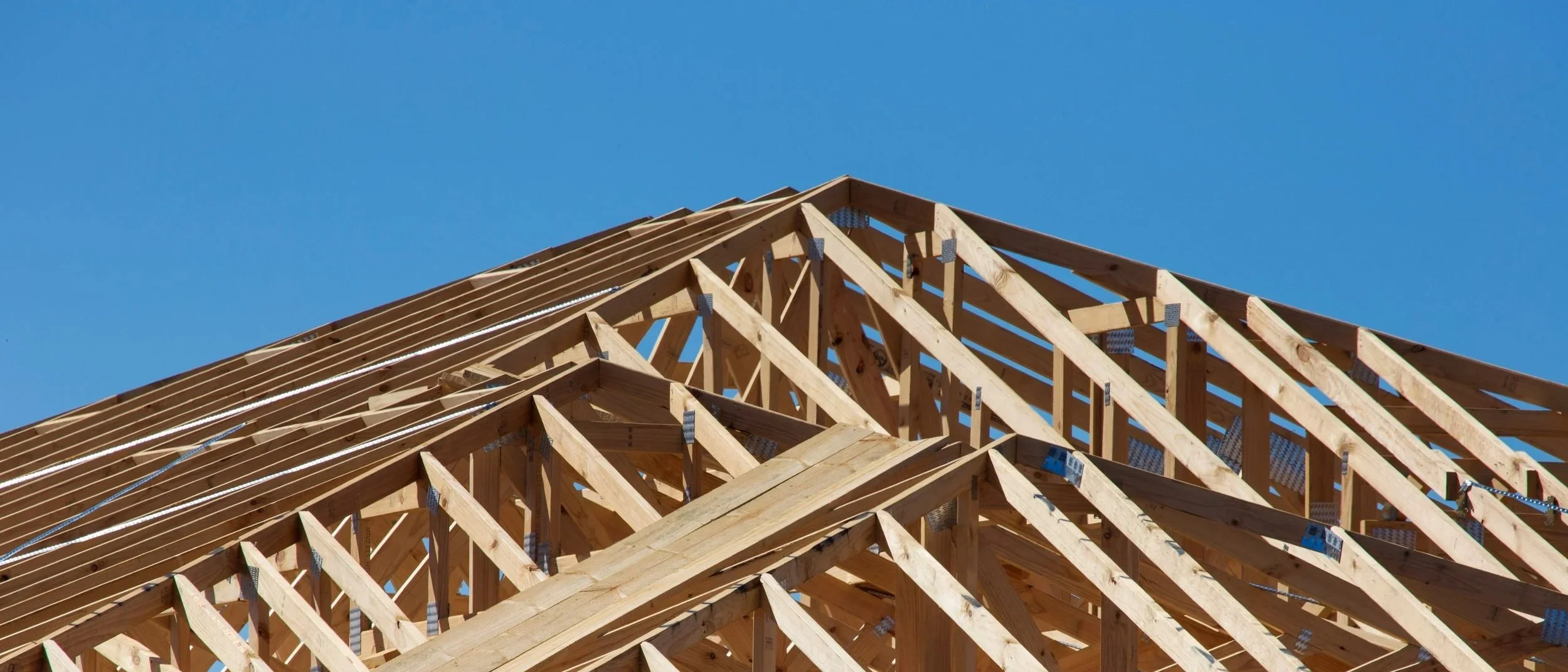
How to Think About Building or Expanding a Home in Jackson Hole
A simple framework for understanding what you can build or expand on a Jackson Hole property.
Summer is fast approaching, which marks the high season for home building in Teton County (though admittedly with this Winter’s relative lack of snow, construction hasn’t had to stall as much as one might expect!).
Nevertheless, as we head into “building season” a big question buyers tend to ask is “How big of a house could I build?” OR “How could this home be expanded?”. This blog post will cover off on those questions.
If this is a topic that interests you, next week (after interviewing a few folks about town), I’ll be sharing a deep dive into 2 of the hottest topics I tend to hear: Build vs. Buy and Buying With Plans to Renovate. Stay tuned for that intel if you’re curious!
Now, as for building allowances for single family residences - it turns out the answer is not entirely straightforward, but based on a few combined factors:
Town of Jackson vs. Teton County
Before evaluating what you can build or expand, it’s important to know which jurisdiction the property falls under. Here’s a quick rundown on the major differences between the two:
| Town of Jackson | Teton County | |
|---|---|---|
| Regulatory framework | Town Land Development Regulations | County Land Development Regulations |
| How building size is typically evaluated | Often influenced by building height limits, setbacks, and floor-area considerations | Often influenced by parcel characteristics such as Base Site Area and subdivision approvals |
| Where properties are typically located | In-town neighborhoods near Town Square and Snow King | Areas like South Park, Wilson, and most properties outside town limits |
Based on the above, two properties with similar lot sizes can sometimes have very different development potential depending on whether they are located within the Town of Jackson or unincorporated Teton County.
Zoning and subdivision rules prevail
Every property falls under either county zoning or a specific subdivision approval, which determines things like:
maximum residential floor area
height limits
setbacks from property lines
site coverage limits
Start by checking these rules. For example, I pulled my subdivision plat map and master planning doc to establish what the baseline restrictions looked like for our house, should we want to add an addition at a later date. Your agent can help with this if you’re looking to build, or if expansion is an important element of the decision to buy.
The building envelope determines where you can build
Most lots here have a defined building envelope, which is the area where structures are allowed. This is shown on the recorded subdivision plat available through public land records. The envelope determines the maximum footprint and placement of a home.
It’s worth noting that nearly all primary homes in Teton County are capped at 8,000 livable square feet and 10,000 total square feet - so even if you’re buying a 50 acre piece of land, you shouldn’t expect to build out a sprawling mansion. What you could do is build out accessory structures as a “compound” surrounding your “primary home” depending on the the site’s maximum development calculations.
Site conditions can further limit development
Natural features may reduce what’s realistically buildable, including:
steep slopes
drainage easements
wetlands or streams
These constraints can shrink the usable portion of a lot both realistically and from a permitting perspective. Teton County evaluates parcels using concepts like Base Site Area (BSA) and Adjusted Site Area (ASA), which account for natural and regulatory constraints. The factors listed above can reduce the portion of a property that counts toward development calculations and influence where structures can be located (making them both realistic and hard-coded restraints).
Look at nearby homes for context
Homes in the same subdivision often fall within a similar size range due to shared design guidelines and building envelopes, so looking at nearby properties can provide a benchmark for what is realistically achievable. For example, my house sits on 0.5 acres an is 2,1000 square feet. The average home in my neighborhood sits on 0.53 acres and is 4,000 square feet. Based on this knowledge alone, I should feel fairly confident in my ability to expand (though it’s worth doing real diligence around the details outlined above).
The takeaway
In Teton County what you can build, or whether you can expand, depends less on acreage and more on zoning rules, subdivision approvals, building envelopes, and the physical characteristics of the land. Understanding these factors provides a strong starting point when evaluating a property’s development potential. Make sure you’re checking all those boxes!
