Why Buying a Home in Jackson Hole Is So Hard
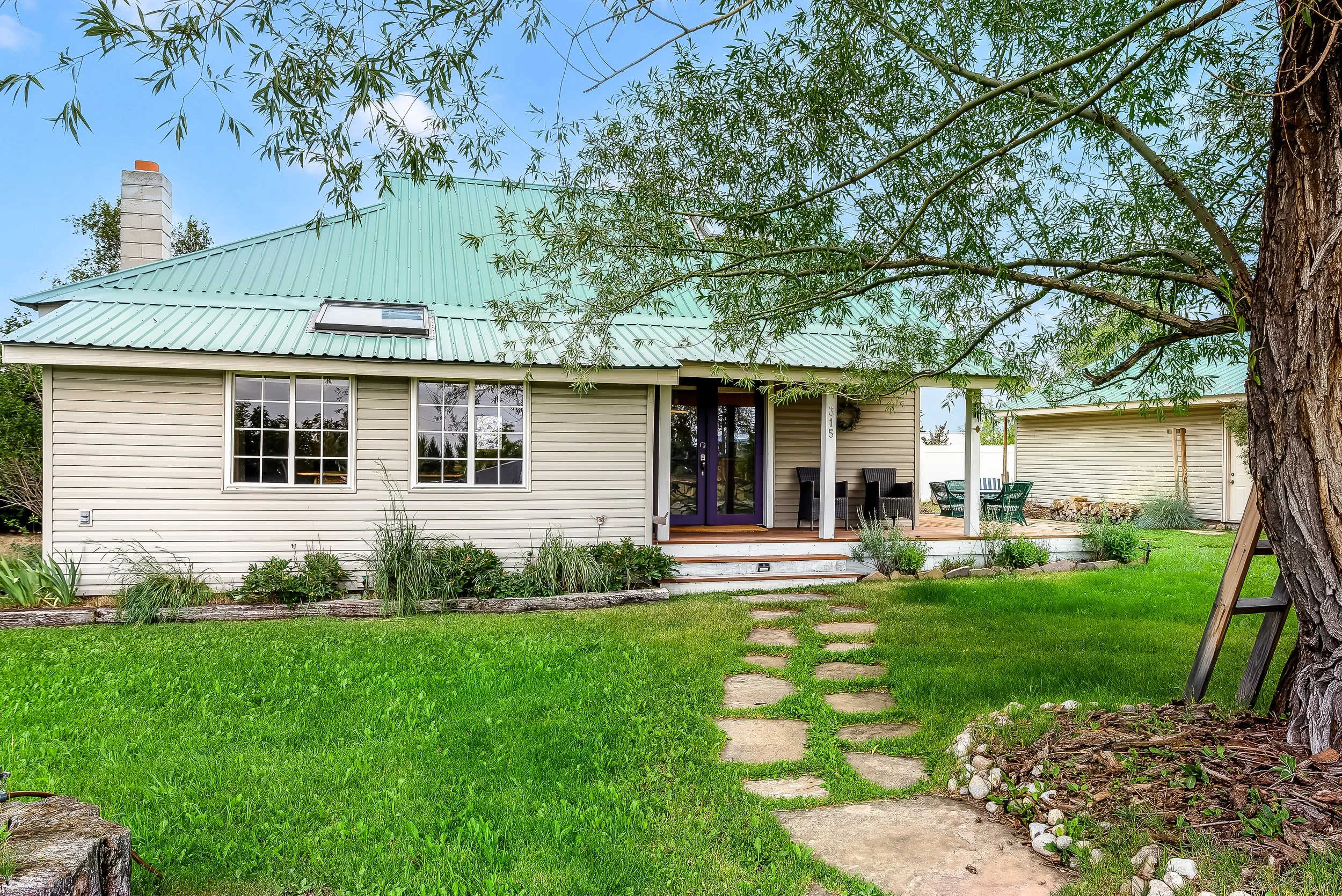
A beautiful home in Stilson Ranch, West Bank, Jackson Hole WY | © Parker Bertles Real Estate
How land protection, housing shortages, and buyer strategy define this market.
Buying a home in Jackson Hole is hard! I’ve experienced the struggle first-hand. The process takes take time, preparation, and of course, more money than what’s required in other markets. People assume it’s mostly due to Jackson’s beauty and wild popularity, (which is true!), but it’s worth highlighting the more profound factors (which are largely isolated from market cycles) which define the struggle: land, demand, and preparation. If you want to be competitive in this market, it’s important that you understand the interplay between all three. So, let’s break it down -
The first thing to understand about the Jackson Hole real estate market is that competition here is structural, not temporary. Yes, there are ebbs and flows in the market, but as an over-all trend, the high level of competition and demand is evergreen thanks to: limited inventory, the profile of the competition, and the actions that successful buyers consistently undertake.
Land
Land protection is the core reason why inventory here is so limited, with only 3% of all land in the Jackson Hole area available for private ownership or development. It’s hard to hate on this piece of the puzzle, since land protection is, after all, what makes this valley such a special slice of heaven to begin with. That said, there is no easy way to expand out of this inherent constraint. Land is tied up as national parks, national forests, state and federally protected land, and in conservation easements.
Even during slower market periods, the amount of private land in Jackson Hole does not meaningfully increase. As a result, inventory remains constrained, and prices tend to stay elevated when demand holds steady.We saw this dynamic play out recently in 2025, where inventory softened slightly but demand remained resilient, leading to year-over-year price stability and, in some segments, continued price growth.
You might now assume that high prices increase inventory. That isn’t the case here. High prices tend to increase competition, not supply.
A general lack of large-scale new developments, strict zoning, land use regulations, and long entitlement timelines further exacerbate the “scarcity issue” (if you want to see it as an issue, that is). In short: scarcity here is not temporary or cyclical, it’s built into the geography.
2. Demand
Demand is steady and comes from… everywhere?
This is a struggle that really stood out to me when my family was trying to find a home in the valley. Having just moved from a family-centric neighborhood in Dallas, we were used to operating within a competitive pool of like-minded buyers and sellers (ie. people who generally fit the narrow buyer profile of the given neighborhood, and were local to the area). Here, we found ourselves competing against every type of buyer from truly the world over. Even in a Jackson neighborhood that tends to skew towards local family residents, we were bidding against wealthy retired buyers from California, a cash buyer with a second home in 3 Creek, you name it!
There is no single buyer profile in Jackson Hole. Buyers come from all over, drawn by a lifestyle and landscape that simply cannot be replicated elsewhere. Think: investors, second-home buyers, and local residents. Scarcity ensures that most buyers are long-term holders, which compounds inventory constraint even more.
3. Preparation
Preparation here is key, and determines who actually buys.
Many buyers approach Jackson Hole using strategies that work well in more flexible markets. The challenge is that Jackson Hole does not behave like a typical supply-and-demand environment. The structural limits on inventory change how sellers evaluate offers and how quickly decisions are made. A few buyer strategies that don’t necessarily translate include:
Waiting on more inventory (we’ve covered this one!)
Relying on contingent offers (this is risky when your competition is so vast and wide)
Expecting price negotiation (well-priced homes still attract strong interest because supply is limited and demand is broad)
Taking time to “learn the market” after homes are listed (in many markets, buyers tour homes, then study pricing, and decide over time. In Jackson Hole, the learning curve must happen before the right home appears)
Treating the purchase as a short-term decision long-term fundamentals here are more relevant than short-term market fluctuations)
Jackson Hole does not reward waiting, uncertainty, or partial preparation. It rewards buyers who understand the market dynamics, prepare early, and are ready to move quickly with strong, clean offers.
4. Tying it all together!
Everything noted above is highly interconnected. Land scarcity intensifies competition, which increases pressure on an already-limited pool of inventory.
As said, I don’t think any of us are going to argue with the land scarcity piece. Every square foot of protected land should be cherished. So what can we control? Preparation. The key to success in an otherwise tricky market.
Talk to an agent, get educated and get organized so you’re ready to act quickly with the strongest possible positioning. Successful buyers are not luckier, they’re just better prepared, and success is 100% possible with the right approach. I hope this article wasn’t too daunting - I thought it would be helpful to spell out the real struggles so that buyers can come eyes wide open and ready to win.